

On 23 April 2026, the Belgian-Chinese Chamber of Commerce (BCECC) hosted the webinar “China’s economic strategy after the Two Sessions”, where Belgian and international experts analyzed the key outcomes of China’s Two Sessions and discussed what these developments mean for companies engaging with China. At the opening of the webinar, Bernard Dewit, Chairman of the Belgian-Chinese Chamber of Commerce, underlined why these outcomes are highly relevant for businesses. The Two Sessions provide key signals on China’s economic priorities, policy direction and long-term development agenda, helping companies anticipate market trends, regulatory developments and future opportunities for cooperation.
The Two Sessions: Setting China’s policy direction
The Two Sessions: Setting China’s policy directionThe Two Sessions are parliamentary meetings at which China’s two main political bodies – the National People’s Congress (NPC) and the Chinese People’s Political Consultative Conference (CPPCC) – discuss the country’s economic priorities and development plans for the coming years. The policy signals emerging from these meetings guide fiscal and monetary policy, industrial development, innovation priorities and broader strategic objectives. For international businesses, they provide valuable insight into China’s medium- to long-term policy trajectory, particularly in a context marked by geopolitical uncertainty, economic volatility and ongoing supply-chain reconfiguration.
The 2026 Two Sessions confirm China’s focus on economic stability while continuing structural adjustment. Policymakers are prioritizing resilience, productivity and sustainable development, with growth expected to remain within a reasonable range. At the same time, China is advancing a more balanced growth model, where domestic consumption, manufacturing upgrading and technological investment are becoming increasingly central as external demand plays a less dominant role.
Economic rebalancing and market complexity: Implications for international business
A key takeaway is that China should not be viewed as a single, uniform market. Instead, it is a highly diverse system of regions, cities and industries, each with distinct dynamics. This diversity, combined with China’s scale in manufacturing, logistics and global distribution networks, is increasingly accompanied by a shift towards higher-end production.
China’s economic model also relies on strong coordination between central policy direction and local implementation. Regional authorities play an active role in executing national priorities, aligning financing, infrastructure and regulatory support with strategic goals. For international businesses, this means that opportunities and conditions can vary significantly, and success depends on understanding both policy direction and local market realities.
The 15th Five Year Plan: A framework for cooperation
The policy direction confirmed at the Two Sessions feeds directly into China’s 15th Five Year Plan, which sets out the framework for the country’s next phase of development. The plan focuses on addressing structural challenges while accelerating the shift towards innovation-driven growth, moving away from reliance on labor and capital accumulation towards productivity and technological advancement.
A central pillar of the plan is technological autonomy and self-reliance, supported by sustained investment in research and development. At the same time, the plan emphasizes the need to strengthen domestic consumption and rebalance the economy — a complex but essential objective.The Two Sessions are parliamentary meetings at which China’s two main political bodies – the National People’s Congress (NPC) and the Chinese People’s Political Consultative Conference (CPPCC) — discuss the country’s economic priorities and development plans for the coming years. The policy signals emerging from these meetings guide fiscal and monetary policy, industrial development, innovation priorities and broader strategic objectives. For international businesses, they provide valuable insight into China’s medium to long term policy trajectory, particularly in a context marked by geopolitical uncertainty, economic volatility and ongoing supply chain reconfiguration.
Priority sectors include advanced manufacturing, digital technologies, artificial intelligence, green energy and life sciences, as well as future-oriented fields such as quantum technology and smart mobility. Together with efforts to upgrade traditional industries and improve social wellbeing, these priorities define areas where international cooperation can be further developed.
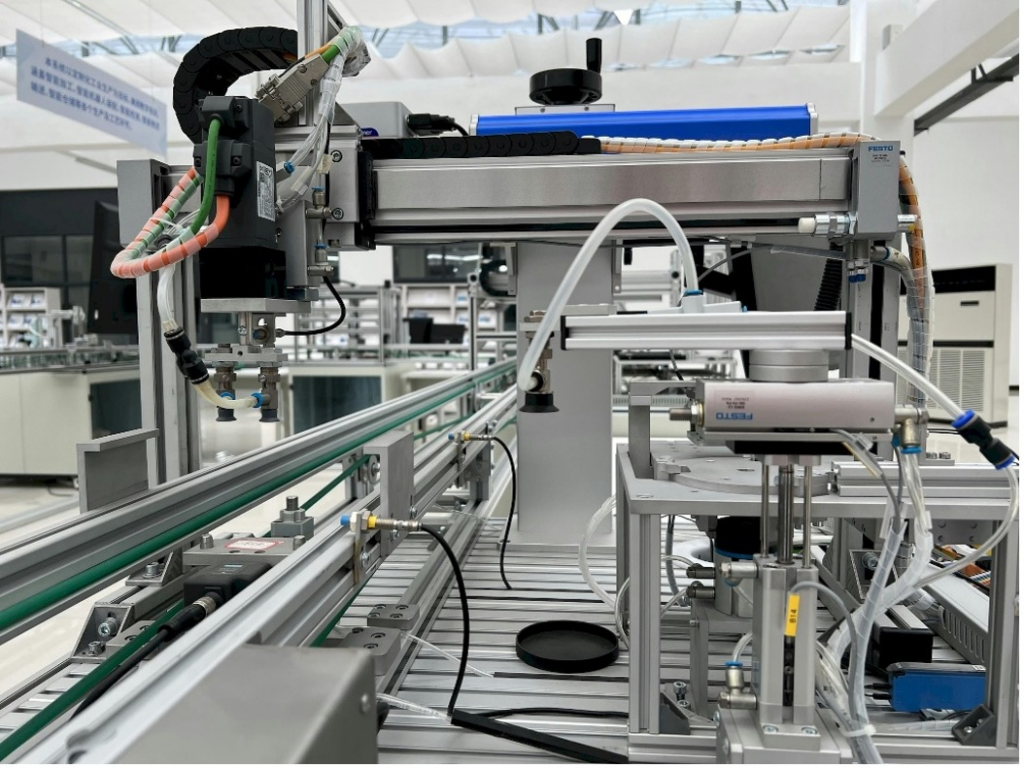
Industrial policy: Competition and collaboration
Industrial policy remains a cornerstone of China’s economic strategy. Central agenda-setting is increasingly complemented by decentralized implementation, allowing regions to tailor development strategies to their specific strengths and accelerate industrial upgrading.
For Belgian and European companies, this creates a dual landscape. In sectors identified as strategic or future industries, competition is expected to intensify as domestic capabilities grow. At the same time, China’s focus on quality growth, technological upgrading and domestic demand creates opportunities in high-value segments, specialised services, advanced materials, green technologies and niche consumer markets. Careful positioning within this evolving policy framework is therefore essential.

Implications for Belgium–China Cooperation
The webinar highlighted that Belgium–China economic relations remain fundamentally complementary. China’s scale in manufacturing and infrastructure development contrasts with Belgium’s strengths in high-value sectors such as pharmaceuticals, chemicals, advanced materials, logistics, life sciences and green technology. Trade and investment relations are gradually shifting towards higher value-added activities, localization, research partnerships and sustainability.
For Belgian companies, the outcomes of the Two Sessions underline both continuity and change. China remains a key market and partner, but cooperation increasingly requires a strategic and well-informed approach. Aligning business models with China’s long-term development priorities, understanding regulatory signals and managing geopolitical risks are essential for sustainable engagement.
While competition will intensify in certain sectors, this does not exclude collaboration. In some areas, cooperation may even face fewer restrictions, while in others opportunities remain through joint projects, research partnerships, technology exchange and selective investment cooperation, particularly where expertise and market access are complementary.
Looking Ahead
The outcomes of the Two Sessions point to continuity rather than disruption. China is managing a complex balance between innovation-driven growth, domestic consumption and economic resilience, while responding to a changing global environment. For Belgian companies, the key takeaway is clear: opportunities for cooperation with China remain significant, but require a long-term, strategic and well-informed approach.
The Belgian-Chinese Chamber of Commerce (BCECC) will continue to follow developments in China and support Belgian and Chinese companies in strengthening their business cooperation.