
In this article, we aim to provide Belgian companies with insight into how Chinese businesses perceive the crisis in the Middle East and its broader implications for global trade and EU-China relations. As Belgian companies are deeply integrated into European and global supply chains, understanding how Chinese companies assess risk, continuity and strategic adaptation in this context can support more informed decision-making, partnership strategies and long-term positioning in an increasingly volatile geopolitical environment.
A pragmatic view from China’s corporate sector
The situation in the Middle East is evolving into a period of growing uncertainty. Rising tensions involving the United States Israel and Iran, combined with disruptions to key maritime routes, are putting significant pressure on global energy markets and international supply chains. For Chinese companies integrated into global industrial and logistics networks, this crisis extends beyond a regional security issue and is reshaping the broader landscape of EU-China relations. It serves as a live test of risk management capabilities and strategic resilience. From the perspective of Chinese businesses, these developments present both short-term operational challenges and longer-term strategic considerations that require calm assessment rather than reactive decision-making.
Short-term impact on supply chains, costs and market risks
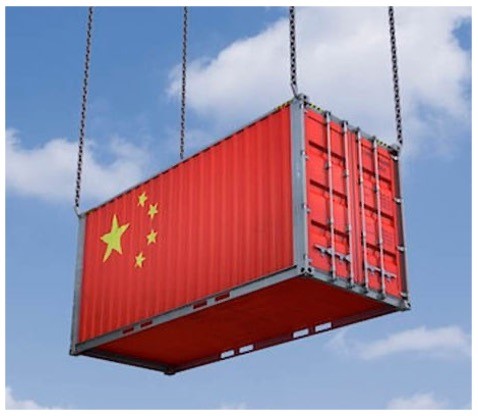
The most immediate impact is felt in logistics and transportation. The Strait of Hormuz is among the world’s most critical energy bottlenecks and a key route for China’s crude oil imports. Increased security risks and interruptions to shipping can lead to higher freight rates, extended delivery times and increased insurance and conflict-risk surcharges.
For many Chinese exporters and importers, these disruptions result in higher operating costs and difficulties in fulfilling contractual obligations. Industry platforms have highlighted that trade with the Middle East is currently experiencing both shipment delays and rising logistics expenses, putting pressure on margins and cash flow.
Beyond logistics, market uncertainty in China is affecting demand and financial settlement reliability. Increased geopolitical risk has weakened investment sentiment and consumer confidence in parts of the Middle East, resulting in declining order volumes or postponed projects for Chinese companies.
At the same time, exchange-rate volatility, tighter foreign-exchange controls and rising compliance concerns are increasing financial risks. Chinese businesses operating in hubs such as Dubai indicate that negotiations are taking longer, counterparties are acting more cautiously and decision-making cycles become slower. This is an understandable reaction in an environment of raised uncertainty.
Long-term perspective: Why the Middle East remains strategically important
Despite short-term turbulence, Chinese companies generally maintain a long-term strategic commitment to the Middle East, driven by strong economic complementarity between the two economies. Many countries in the region are implementing ambitious economic plans, such as Saudi Arabia’s Vision 2030, and are actively seeking international partners across several sectors including renewable and new energy, digital infrastructure and smart cities, manufacturing and industrial upgrading, and logistics and connectivity.

These are exactly the sectors where Chinese companies possess competitive strengths. From the perspective of Chinese business leaders and academic observers, this structural alignment is deeply rooted and unlikely to be fundamentally altered by short-term geopolitical shocks.
The crisis has also revealed the growing maturity of Chinese companies operating overseas. They are moving beyond a simple export-driven model toward deeper localization, brand building and export of technology and expertise. This shift reflects a stronger ability to absorb external shocks and manage complex risk environments, reinforcing long-term confidence in China.
Implications for EU-China relations
While the Middle East crisis does not directly target China-EU relations, its secondary effects are being closely observed by Chinese businesses. Disruptions to traditional maritime routes have underscored the strategic value of diversified transport corridors. In this context, China-Europe freight rail services have gained renewed attention as a stable and secure alternative for trade between Europe and Asia. It highlights the critical role of resilient infrastructure connectivity amid rising geopolitical volatility. At the same time, disruptions at Middle Eastern aviation hubs have indirectly boosted demand for direct China-Europe air routes, illustrating the adaptive and self-correcting nature of global supply chains.
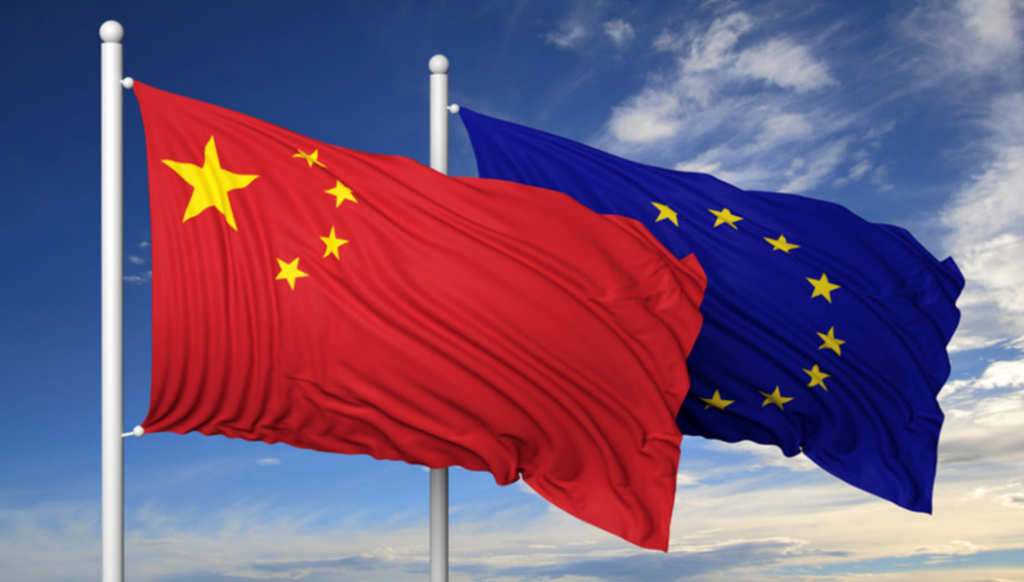
From a strategic perspective, Chinese companies view the current situation as revealing shared interests between China and the EU. Rising energy prices, supply-chain uncertainty and geopolitical fragmentation pose challenges on both sides. Europe’s drive for greater strategic autonomy could facilitate more pragmatic forms of cooperation with China. Sectors of common interest include: safeguarding the multilateral trading system, enhancing energy security and supply-chain resilience, advancing green and digital transition, improving connectivity and infrastructure coordination. For Chinese businesses, EU-China relations are a key stabilizing factor in an increasingly fragmented global economy.
Conclusion
Amid intensifying geopolitical realignments, Chinese companies see themselves as stabilizers rather than disruptors. From this perspective, crises are not only risks to be managed, but also test of resilience of companies, supply chains and international partnerships. For both China and the EU, cooperation rather than confrontation remains the most viable path through global uncertainty.
For Belgian companies, these developments are particularly relevant as they navigate their own exposure to global supply chain volatility, energy price fluctuations and shifting trade routes. The Belgian-Chinese Chamber of Commerce (BCECC) remains committed to facilitating the exchange between China and Belgium and supporting companies on both sides in better understanding each other’s strategic outlooks in an uncertain world.