
China has emerged as the global leader in electric vehicles (EVs). What started as a strategic push towards cleaner mobility has evolved into one of the world’s most significant industrial transformations. Today, China is not only the world’s largest EV market, but also a leading force in battery production, charging infrastructure, software integration and smart mobility technologies. In 2024, the country sold nearly 13 million new energy vehicles (NEVs), accounting for more than 60% of global EV sales.
As the Belgian-Chinese Chamber of Commerce (BCECC) continues to promote business exchanges between Belgium and China, understanding developments in China’s EV sector is becoming increasingly important for companies active in manufacturing, logistics, technology and clean energy. The sector is reshaping global supply chains, industrial strategies and investment flows, creating both challenges and opportunities for Belgian businesses and their European counterparts.
China’s rise as an EV superpower
One of the key reasons behind China’s success is the strength of its industrial ecosystem. Unlike many other countries, China has built a highly integrated value chain covering everything from raw materials and batteries to vehicle manufacturing and software development. Companies such as BYD have embraced vertical integration, producing batteries, semiconductors and vehicles within a single ecosystem. This allows them to innovate rapidly while maintaining a strong cost advantage.
China is also home to a broad range of EV manufacturers. Established groups such as BYD, Geely (owner of Volvo Cars) and SAIC operate along with innovative players including NIO, XPeng, Li Auto and Xiaomi Auto. Together, they have transformed China into a global centre of electric mobility innovation.
Why China leads the EV revolution
Government support has played a crucial role in the sector’s development. Over the past decade, Chinese authorities have introduced purchase subsidies, tax incentives, EV quotas and extensive investments in charging infrastructure. These measures have accelerated adoption among consumers while supporting the growth of domestic manufacturers. Electrification has become part of a broader national strategy aimed at strengthening technological leadership and industrial competitiveness.
China’s leadership is equally evident in battery technology. Combined with large-scale manufacturing capabilities and continuous investment in research and development, the country has succeeded in lowering costs and improving vehicle performance. Chinese companies are also making significant progress in intelligent driving systems, connectivity and ultra-fast charging technologies.
A sector entering a new phase
While the sector’s growth remains impressive, China’s EV industry is entering a new stage of development. Competition has intensified, resulting in strong price pressure and lower profit margins. More than 100 EV brands are currently active in China, although further consolidation is expected in the coming years.
As domestic competition intensifies, Chinese manufacturers are increasingly looking abroad. International expansion has become a strategic priority, with Europe emerging as one of the most important destinations. Chinese EV companies are expanding their sales networks, strengthening partnerships and exploring local manufacturing opportunities across the continent.
China and Europe: Competition and cooperation
The growing presence of Chinese EV manufacturers in Europe has triggered discussions about competition, tariffs and industrial policy. Chinese brands such as BYD, MG, NIO and XPeng continue to expand their presence across European markets.
At the same time, the relationship between China and Europe should not be viewed solely as a matter of competition. The EV transition requires significant investment, advanced technologies and resilient supply chains. Chinese investment can contribute to local production, while European companies can offer expertise in engineering, sustainability, advanced manufacturing and premium automotive technologies.
What does it mean for Belgium
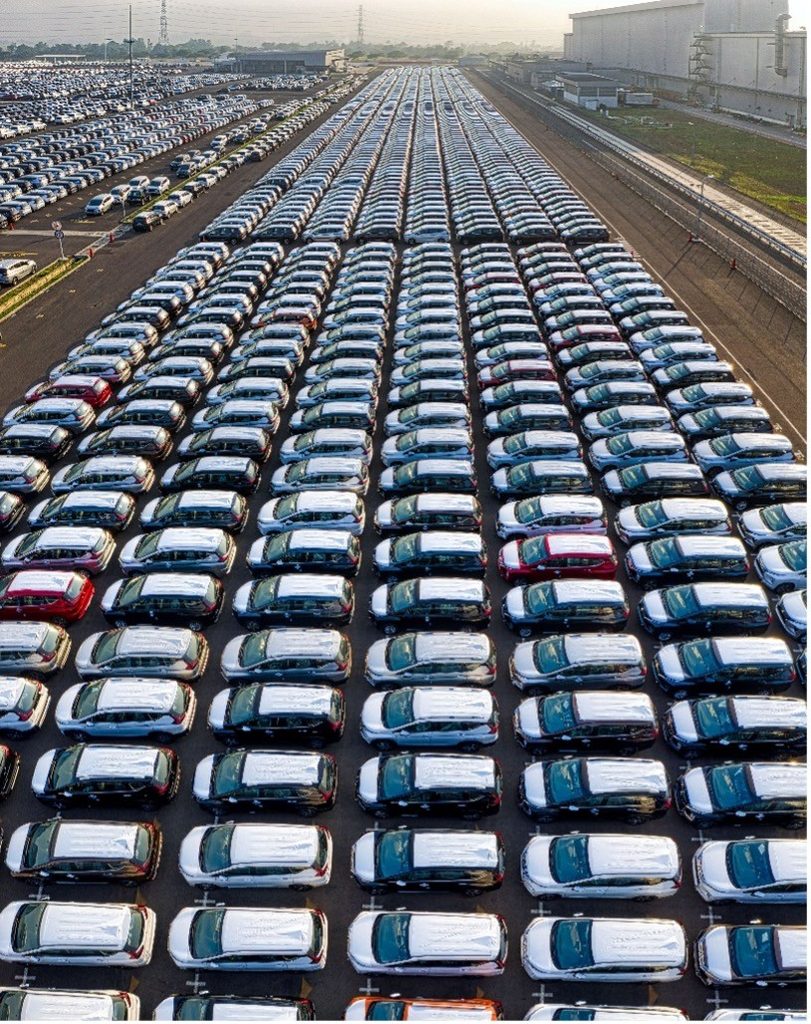
Belgium is well positioned to benefit from these developments. As one of Europe’s leading logistics hubs, the Port of Antwerp-Bruges plays a key role in facilitating trade flows between Europe and China, including vehicles, batteries and related components. Belgium’s central location and strong transport infrastructure make it a strategic gateway to the European market.
Beyond its role as a logistics hub, Belgium also maintains a significant industrial footprint within the automotive sector. Volvo’s plant in Ghent has become an important production location for electric vehicles, while broader clean energy cooperation initiatives demonstrate the growing interaction between the Belgian and Chinese markets.
Business opportunities for Belgian companies
For Belgian companies, opportunities extend far beyond vehicle manufacturing. The battery value chain offers significant potential, particularly in battery recycling and circular economy solutions. Other promising sectors include advanced materials, engineering services, charging infrastructure, logistics solutions and premium automotive components.
Research partnerships, technology exchanges and joint ventures can further strengthen innovation and competitiveness. Rather than viewing China’s EV sector solely as a challenge, Belgian companies may find opportunities by identifying complementary strengths and pursuing mutually beneficial cooperation.
Looking ahead
The electric vehicle revolution is still in its early stages. China has established itself as the global frontrunner, but the future of sustainable mobility will increasingly depend on innovation, international cooperation and cross-border investment. For Belgium and Europe, the challenge is not simply how to respond to China’s rise, but how to engage constructively with one of the world’s most important industrial transformations.
The EV transition presents both challenges and opportunities for Belgium-China cooperation. As the Belgian-Chinese Chamber of Commerce (BCECC) continues to strengthen economic ties between both countries, it remains committed to fostering dialogue, knowledge sharing and business opportunities in this rapidly evolving sector.