
Recently, we had the pleasure of interviewing Mr. Jan Helskens, Chairman of The Cookware Company, a global leader in the housewares industry and a recognized pioneer in PFAS-free cookware solutions. As a Patron Member of the Belgian-Chinese Chamber of Commerce (BCECC), Mr. Helskens is closely connected to the Belgian-Chinese business community and actively contributes to strengthening economic ties between both regions. In this interview, we explore the company’s international growth journey, its commitment to sustainable innovation, and the strategic importance of China within its global expansion. He also shares valuable insights from his personal experiences in China and reflects on the opportunities and challenges of doing business in this dynamic environment.
1. As Chairman of The Cookware Company, you naturally take a broad, cross-regional view. How important is China today in the company’s long-term global strategy, and how has this role evolved over the years?
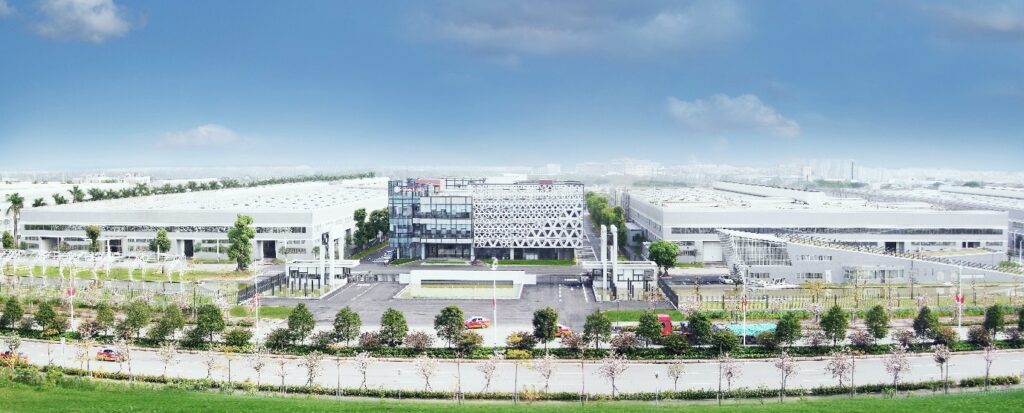
I would say that China has been a cornerstone of our company from day one. From the very beginning, we started producing in China, simply because the availability of resources there was not comparable to Belgium. This does not only refer to the workforce, but also to the supply chain for materials. We started producing in China from the start and today the factory we established in Jiangmen still represents a crucial element in the development of the company and of our entire group.
We also produce in Vietnam, South Korea and Italy, but the factory in China remains by far the largest. Moreover, we use the Chinese factory as a hub of expertise. The know-how we have built up there is now exported to our other production locations. In the past, people generally assumed that the transfer of know-how always went from West to East. Now, it has clearly changed. We often rely heavily on our teams in China to help improve our other production facilities, and to apply the experience they have built up in China to our overseas markets.
2. In Europe, China is often still perceived primarily as a low-cost manufacturing location. Based on your experience with the Jiangmen facility, how does this perception differ from today’s reality?
You must understand that when we started in China many years ago, the main opportunity was related to labor. At that time, the advantage of producing in China was largely about labor costs. Today, however, that is no longer the case.
Salaries for top professionals (for example, engineers and similar profiles) are now quite comparable internationally, but the real strengths today lie elsewhere. First, the level of efficiency
that can be achieved in China. Secondly, the strong focus on innovation in production processes in general. And thirdly, I would also add the work ethic. In China, people are still very eager to work and very willing to learn. There is a strong desire to remain competitive in that respect, something which we see starting to decline in other regions of the world.
3. Which challenges do you believe European companies tend to underestimate when manufacturing in China? And conversely, which strengths of the Chinese industrial ecosystem are still too often overlooked?
Honestly, I think the first thing European companies need to do is stop comparing. The first time I travelled to China, I was still young, just 29 years old. At first, you compare and you immediately judge whether it is good or bad according to your own standards. But it has little to do with good or bad; it is mainly about differences. What China has demonstrated in recent years -its mentality, flexibility and speed- is impressive. If you are resilient, flexible, and open to different approaches, you can establish strong collaboration and achieve a lot in a relatively short time.
It is also important to recognize that we all grow up with a particular cultural framework. Only when you take the time to understand China’s background, you see that Chinese culture does not align with European culture and is very different. These are all essential elements to consider. If you can understand and evaluate all these factors, you will create truly successful deals in China. Equality important is the hospitality of Chinese people: they welcome you properly and always ensure that you are well taken care of.
4. How does The Cookware Company ensure consistent quality standards between production in Europe and China? Are there technologies or process innovations developed in China that now set the benchmark for other production sites within the group?
The sheer number of engineers graduating each year in China is incomparable to other parts of the world and there is in China still an ongoing research and development in machinery, robotics, automation, and related areas. China continues to invest heavily in different areas.
In some of our other facilities, machines can be 20 to 25 years old, while in China, the machinery is renewed and upgraded every year to improve efficiency both in terms of productivity and quality control. When it comes to manufacturing, catching up in many sectors is extremely difficult. In this respect, China has no longer lessons to learn; rather, it has lessons to give.
So, it is a symbiotic approach. Everyone in the group is open to learning from each other, and the goal is simple: to produce better, to improve quality, to be more efficient, and ultimately to maintain market leadership and do even better tomorrow.
My first experience in China goes back to 1996, when Chinese people were extremely helpful and respectful in mastering new processes. Ove the last 6 to 7 years, we have also reversed roles to some extent, giving our teams in China more authority and autonomy to make decisions or adjust processes. A Vietnamese, Korean or Italian colleague simply must acknowledge today that the quality in China is better.
5. How would you describe the collaboration between the teams in Belgium and China? From a board-level perspective, which cultural or organizational differences still require the most attention today?
In the early days, there was a strong collaboration between my partner in China, who ran the factory, and myself. If a problem arose, we simply discussed it together: how do we address it, and how do we handle it on site?
But I believe that managing China directly from Belgium misses the point. You need to give the Chinese team trust, allow them to build know-how and enable them to make autonomous decisions so that by time you arrive in China, problems are already resolved.
Cultural differences are often highlighted, but in my experience, if you feel comfortable in the local culture and build trust, collaboration works smoothly. Problems are not ‘their’ problems – they are ‘our’ problems – and we solve them together. Focusing too much on cultural differences can be misleading. The real focus should be on creating a shared corporate culture where both Belgian and Chinese teams feel confident, trusted and aligned. Once that foundation is established, success naturally follows.
6. Many European companies continue to view China mainly as a production base. To what extent does China already play, or could it play in the future, a role as a sales market or strategic commercial region for The Cookware Company?
We did explore the Chinese market a few times to assess its size, opportunities and potential. That is true. However, about 90% of global production in our category already takes place in China, which makes price competition extremely strong and creates massive logistical and distribution challenges.
To develop the market properly and efficiently, you either need significant human resources on the ground, or you need to work with a local partner. In our case, while we kept an eye on China as a market, the commercial distance was still quite large.
In contrast, in other markets where we are active, we achieve much better results with just a fraction of effort. So, the key question is: how do you allocate resources, time, and focus?
For that reason, China has not been at the top of our priority list as a sales market. We continue to monitor it of course, but as long as we achieve much better results elsewhere, it remains more advantageous for us to focus on those other markets.
7. We are operating in a context of increasing geopolitical tensions and discussions around ‘de-risking’. How do you, as Chairman, view the future role of China in global supply chains?
It would be easy to consider starting production elsewhere in Southeast Asia (Thailand, Cambodia, etc). However, in our sector, none of these locations can match China in terms of infrastructure, access to right resources, skilled workforce, supply chain and overall conditions. Companies that have moved production to other Southeast Asian countries often face much longer lead times,
and they rarely find the same level of motivated and skilled human resources as in China. So, the question becomes: what do you really gain by relocating?
Even in the context of geopolitical tension, I trust common sense. For low-cost, everyday products it remains far more practical to produce in China. We benefit from China’s focus on quality, efficiency and attention to even small details; things that are often overlooked in other countries.
China is also very proactive on environmental and ecological fronts. For example, they have invested heavily in wind farms, solar panels and electric vehicles, not only to achieve sustainability but also to reduce dependence on foreign countries. At our Chinese production facility, we have implemented our own water purification and air filtration systems, strong recycling programs and we were pioneers in producing PFAS-free coatings.
Environmental responsibility is not a cost; it is a strategic advantage. Products made in China with minimal environmental impact demonstrate leadership to overseas markets and set a standard for quality and sustainability. China will remain a critical hub in global supply chains for the future.

8. The BCECC represents many Belgian SMEs that are uncertain about engaging with China. Based on your experience, when does China still make strategic sense for Belgian companies today—and when might it not?
I believe Belgian SMEs today should be open to exploring partnerships with China, but the approach must be strategic. What usually does not make sense is to go to China and try to start production from scratch without experience or preparation. The best opportunities arise when a Chinese company is strong in its product but lacks access to certain markets or market knowledge. That is where collaboration can be mutually beneficial. If there is a good match, Belgian SMEs can still build a strong future in China.
It is also essential to look at China as it is today, not as it was 10 years ago. The country has changed enormously over the last decade; entire cities, infrastructure, and business practices have evolved. My advice to Belgian companies is simple: go and see for yourself. The pace of change is incredible.
9. You have been active in the China–Europe business context for many years. Is there a personal experience or moment that fundamentally shaped your view of China?
What has truly shaped my view of China is the role of the government. In general, the government acts as a partner and wants to see you succeed. When they see an opportunity to help you, they will do so
Chinese government officials have always shown sincere interest in how we can develop our business, both in good times and during challenging times. I have not encountered this level of engagement anywhere else. They proactively explore what they can do to support your business, often through relatively simple measures such as administrative simplifications and so on. They encourage you to think critically about what you are doing, how to improve, and how to innovate.
10. Looking ten years ahead, what role do you see China playing in the future of The Cookware Company—and what role would you ideally want China to play in that story?
Honestly speaking, a 10-year period in Belgium is very different from a 10-year period in China. It is important to keep that in mind. Considering the current geopolitical climate, everything seems uncertain and constantly changing.
In that context, one thing is clear: China remains remarkably stable. That stability gives me and our company confidence when thinking about the next ten years. I can say with certainty that the situation will continue to improve. I am fully confident that China will keep moving forward, becoming even stronger and more capable over time.
We sincerely thank Mr. Helskens for sharing his insights into his company and his experience in China. It is a pleasure to have The Cookware Company as a Patron Member, and we greatly appreciate their active involvement in our network. The Belgian-Chinese Chamber of Commerce (BCECC) remains committed in supporting companies in navigating this journey while strengthening connections between Belgium and China. Please contact us in case you need more information.