
At the heart of China’s industrial policy is Made in China 2025 (MIC2025), launched in 2015. Its ambition is clear: transform China from a low-cost manufacturing base into a global leader in advanced industries. The policy targets key sectors such as semiconductors, robotics, aerospace, electric vehicles and biopharma, aiming to build global competitiveness across entire value chains, from research and development to final production.
Beyond industrial upgrading, one concept has become increasingly central: technological self-reliance. Reducing dependence on foreign technology is no longer just an economic objective; it has become a strategic priority linked to national security and geopolitical positioning. In recent years, global disruptions and rising technological tensions have accelerated this shift. China is investing heavily in domestic capabilities in critical sectors to secure greater control over key technologies and reduce reliance on external sources.
A system, not a single policy
China’s industrial policy is not built around a single mechanism, but around a coordinated system. This reflects a defining characteristic of China’s approach: mobilizing government, finance and industry around long-term national priorities.
Rather than relying solely on subsidies, the government uses a wide range of complementary tools, including:
- Direct subsidies and tax incentives
- Preferential loans and state-backed investment funds
- Government procurement and demand-side support
- Market access restrictions and localization requirements
- Development of industrial clusters and integrated supply chains
What makes this system particularly effective is its multi-level governance structure. While strategic direction is set at the central level, provincial and local governments actively implement and adapt policies to align with regional strengths. This creates a model that is centralized in vision but decentralized in execution, capable of deploying resources at scale while remaining flexible and adaptive.
Why it has been effective?
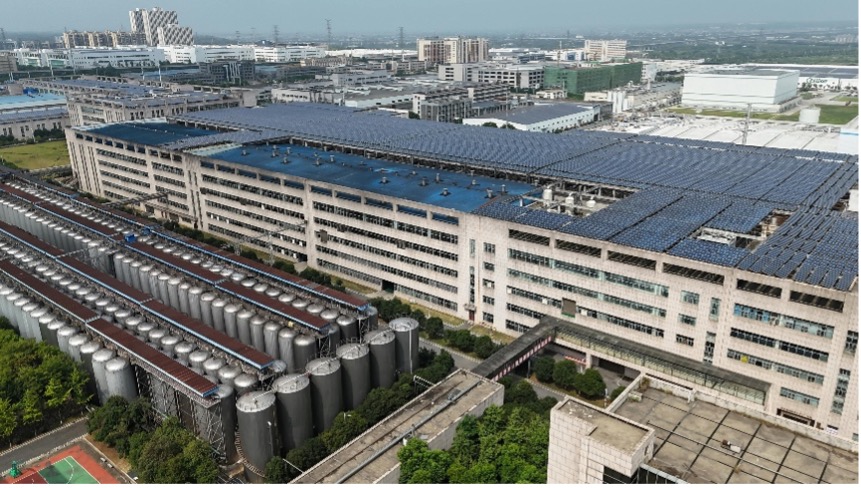
Over the past decade, China has achieved significant progress in several strategic industries and is a global leader in different sectors.
Three key drivers help explain this performance:
- Long-term consistency: China provides consistent policy support over extended periods, allowing industries to grow, scale and mature without the uncertainty often seen in more short-term policy environments.
- Industrial depth and scale: China’s extensive manufacturing ecosystem and integrated supply chains enable rapid commercialization, turning innovation into large-scale production faster than many competitors.
- A strong focus on self-reliance: By prioritizing domestic capabilities in strategic sectors, China reduces exposure to external shocks and strengthens control over key technologies. This focus has become a major driver of investment, policy design and industrial development.
Together, these elements create a powerful combination: scale, speed and strategic direction.
Trade-offs and global impact
Despite its successes, China’s industrial policy also comes with structural trade-offs and is not without challenges. The combination of strong state support and local competition can lead to overcapacity, where production exceeds demand, particularly in sectors such electric vehicles, batteries and industrial machinery.
There are also concerns about resource allocation. Capital does not always flow to the most efficient companies and overlapping investments across regions can reduce overall productivity.
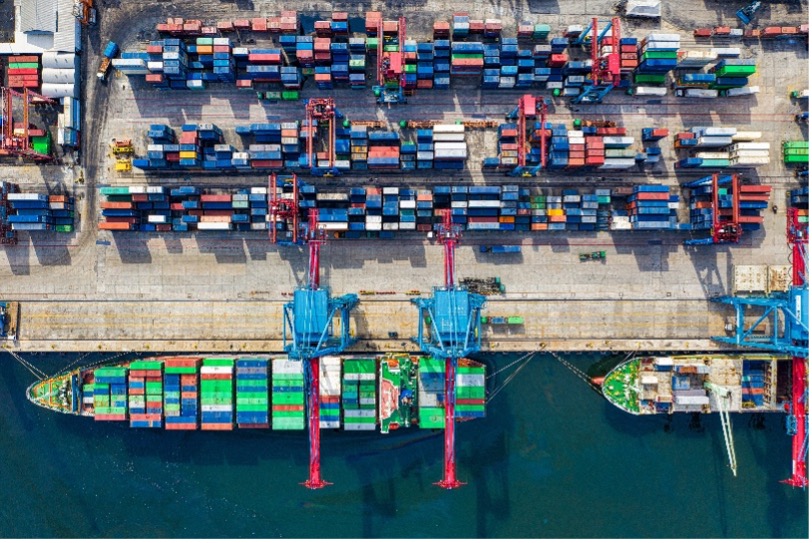
These effects are increasingly visible beyond China’s borders. By supporting export-oriented industries, China has expanded its global market presence, reshaping trade patterns and intensifying competition for European manufacturers. As a result, industrial policy has become a central issue in international economic relations, driving debates on tariffs, subsidies and economic security.
What does it mean for Belgium and Europe?
China’s industrial strategy presents both challenges and opportunities. Several key insights can be identified:
- Long-term focus matters: Sustained support can accelerate industrial development.
- Scaling is critical: China excels at bridging the gap between innovation and market deployment.
- Context is essential: China’s system operates within a model of state capitalism, where state-owned companies play a significant role; a structure that cannot simply be replicated in Belgium and Europe.
At the same time, opportunities remain. Belgian and European companies can benefit from access to cost-efficient technologies, particularly in green energy, as well as from collaboration in selected innovation ecosystems.
From understanding to action
China’s industrial policy continues to develop, but its direction is clear: greater technological independence, stronger domestic capabilities and deeper global competitiveness. For Belgian and European companies, the key challenge is not to replicate this model, but to understand it and respond strategically.
This starts with asking practical questions:
- Where can we remain competitive in global value chains?
- Where should we partner with Chinese players?
- Where do we need to reduce critical dependencies?
China’s industrial policy has become one of the most debated drivers shaping the global economy. For Belgian and European companies and policymakers, understanding its underlying logic is no longer optional; it is essential for navigating an increasingly complex and competitive landscape.
In this rapidly changing environment, staying informed and engaged through the Belgian-Chinese Chamber of Commerce (BCECC) is essential for companies seeking to succeed in business relations with China.